

NOVEMBER 15, 2024 | 8:00 PM
ORLANDO SINGS SYMPHONIC CHORUS | ORLANDO SINGS HARMONIA | Andrew Minear and Sandra Shafer, conductors
Ledean Williams, collaborative pianist
The Harriett Coleman Center for Performing Arts (901 Highland Ave, Orlando, FL 32803)
(scroll down for additional program information)
PARKING & VENUE INFORMATION
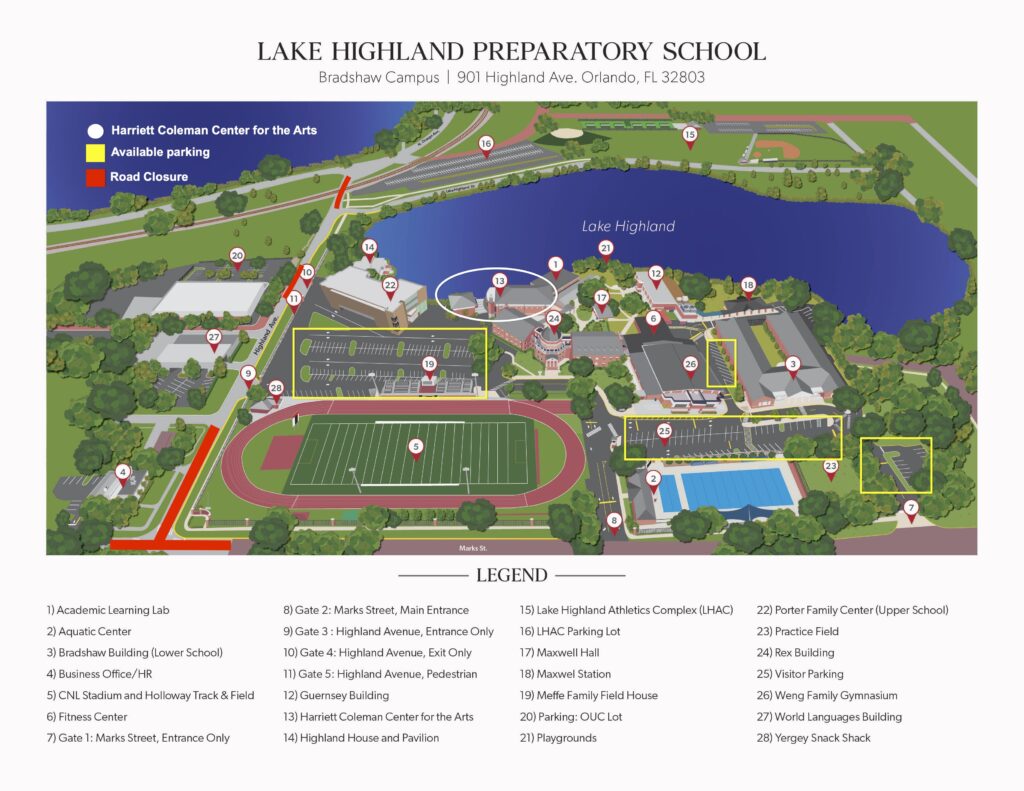
Enter the campus of Lake Highland Preparatory School from Marks Street at Gate 2 (#8 on the map). Note that there are multiple road closures on Highland Ave, so please plan accordingly. Available parking is indicated by the yellow rectangles. The concert is in the Harriett Coleman Center for the Arts (#13 on the map).
A letter from the director…
Dear Friends of Orlando Sings,
Welcome to the Concerts at the Coleman Series in our new venue, the Harriett Coleman Center for the Arts! It is such a thrill to bring the magic of choral music to life with our vibrant community of singers, and to see Orlando Sings audiences coming together again to experience this ancient and deeply human art form. I am especially excited for those who are new to professional choral concerts, who will feel the powerful spirit and energy that fills the room when we’re enveloped in music, voices, and poetry.
Tonight, we are thrilled to begin this journey with a concert dedicated to opera choruses—a genre where choral voices take center stage as “the voice of the people.” In opera, the chorus reflects the thoughts, hopes, and struggles of society, embodying the resilience, joy, and pain of the human experience. Each chorus tells a part of the larger story of humanity—our collective joys and sorrows, our fears and resilience, and our unending hope for a better world.
When we sing together, we are united, each voice lending strength to the other—a powerful reminder of our shared humanity and the impact we can have when we come together.
I am grateful to each of you for being part of the Orlando Sings community. Your presence here tonight helps us create a space where music not only entertains but also fosters reflection, connection, and compassion. As you listen, may you find inspiration in the stories these choruses tell, and may their music remind us of the beauty and resilience within us all.
Thank you for being here and supporting the arts in our community. Orlando Sings is possible because of your support. Please help us continue to share the gift of music by purchasing tickets, bringing your friends, following us on social media, subscribing to our email list, and donate what you can. Together, we create music that transforms lives, builds cultural bridges, and strengthens our community.
Missed out on the early bird season subscription pricing? Good news! We are pleased to offer attendees of tonight’s concert a 10% discount for all remaining concerts. Visit orlandosings.org/boxoffice and enter discount code RESOUNDVIP.
With gratitude,
Andrew Minear, D.M.A.
Artistic and Executive Director
ORLANDO SINGS GOES TO THE OPERA!
A story of humanity’s struggles, passions, and dreams…
PROGRAM
ACT 1: SETTING OUT
Voyagers’ Chorus from Idomeneo – Wolfgang Amadeus Mozart (1756–1791)
Francesca Coverini, soprano
Bridal Chorus from Lohengrin – Richard Wagner (1813–1883)
Chorus of Wedding Guests from Lucia di Lammermoor – Gaetano Donizetti (1797–1848)
Pedro Valdez, tenor
ACT 2: LONGING AND DESIRE
Habanera from Carmen – Georges Bizet (1838–1875)
Hillary Brown, mezzo-soprano
Anvil Chorus from Il Trovatore – Giuseppe Verdi (1813–1901)
Bell Chorus from Pagliacci – Ruggero Leoncavallo (1857–1919)
ACT 3: SHADOW AND STRUGGLE
Cauldron Dance from Macbeth – Giuseppe Verdi (1813–1901) [sung by Harmonia]
Cecilia Skrocki, soprano
Eri tu che macchiavi from Un Ballo in Maschera – Giuseppe Verdi (1813–1901)
Thandolwethu Mamba, baritone
Chorus of the Hebrew Slaves from Nabucco – Giuseppe Verdi (1813–1901)
ACT 4: BEAUTY AMIDST LOSS
Humming Chorus from Madama Butterfly – Giacomo Puccini (1858–1924)
Dido’s Lament/With Drooping Wings from Dido and Aeneas – Henry Purcell (1659–1695)
Dorea Cook, mezzo-soprano
Dôme épais (The Flower Duet) from Lakmé – Léo Delibes (1836–1891) [sung by Harmonia]
Summertime from Porgy and Bess – George Gershwin (1898–1937) [sung by Harmonia]
Katie Counts, soprano
ACT 5: RESILIENCE AND HOPE
Procession of the Nobles from Mlada – Nikolai Rimsky-Korsakov (1844–1908)
You’ll Never Walk Alone from Carousel – Rodgers (1902–1979) & Hammerstein (1895–1960)
Erika Vasallo, mezzo-soprano
Sunday from Sunday in the Park with George – Stephen Sondheim (1930–2021)
Combined Choirs
Somewhere from West Side Story – Leonard Bernstein (1918–1990)
NARRATIVE & PROGRAM NOTES
ACT 1: SETTING OUT
1. Voyagers’ Chorus from Idomeneo – Wolfgang Amadeus Mozart (1756–1791)
TONIGHT’S NARRATIVE
Our journey begins with a group of travelers venturing forth, symbolizing humankind’s endless search for new horizons, dreams, and a better future. They leave behind familiar shores, inspired by the promise of discovery, love, and growth.
ORIGINAL CONTEXT
In this powerful scene from Idomeneo, Mozart’s opera set in ancient Crete, sailors pray for safety at sea as they journey under the watch of the gods. This chorus captures their reverence and vulnerability, setting a tone of devotion and tension as they face the whims of nature and fate.
2. Bridal Chorus from Lohengrin – Richard Wagner (1813–1883)
TONIGHT’S NARRATIVE
The travelers celebrate a union, a joining of hearts that symbolizes hope and trust in the future. They imagine a world made whole by love, sharing this moment of joy and beauty in anticipation of what lies ahead.
ORIGINAL CONTEXT
Known to many as the “Here Comes the Bride” march, this chorus celebrates the wedding of Elsa and Lohengrin with joy. Yet, Wagner weaves subtle tension into the moment, as Elsa’s trust will soon be tested by doubt. This piece offers a glimpse of happiness that foreshadows the opera’s coming turmoil.
3. Chorus of Wedding Guests from Lucia di Lammermoor – Gaetano Donizetti (1797–1848)
TONIGHT’S NARRATIVE
Friends and family join in the celebration, yet hints of underlying tension begin to surface. Even amidst their joy, the harmony feels fragile, a subtle reminder that happiness is not always guaranteed.
ORIGINAL CONTEXT
In Lucia di Lammermoor, wedding guests gather to celebrate a union clouded by heartbreak. Forced into a marriage she dreads, Lucia’s despair hides beneath the cheerful sounds of celebration. This chorus of false cheer contrasts with the tragedy that unfolds, capturing the opera’s themes of love, fate, and betrayal.
ACT 2: LONGING AND DESIRE
4. Habanera from Carmen – Georges Bizet (1838–1875)
TONIGHT’S NARRATIVE
As love ignites, it also reveals its dangers—obsession, jealousy, and the heart’s capricious nature. Here, passion sparks the complexities of human relationships, where love’s intensity is matched only by its unpredictability.
ORIGINAL CONTEXT
As Carmen sings of love’s fickle nature, the chorus gathers around her, drawn by her charm and magnetism. This iconic moment introduces Carmen as a free spirit who defies societal constraints, setting the stage for the passion and intensity that will drive her story to its fateful end.
5. Anvil Chorus from Il Trovatore – Giuseppe Verdi (1813–1901)
TONIGHT’S NARRATIVE
The sound of iron striking iron calls forth a sense of strength and resilience. It is a reminder of both the grit needed to shape a life of meaning and the toil that often accompanies our deepest desires.
ORIGINAL CONTEXT
The Anvil Chorus is one of the most iconic moments in Il Trovatore. Set against the clanking anvils of dawn, the Spanish gypsies sing of their freedom and camaraderie. This vibrant and energetic chorus celebrates their resilient spirit, embodying the themes of pride and defiance that run through the opera.
6. Bell Chorus from Pagliacci – Ruggero Leoncavallo (1857–1919)
TONIGHT’S NARRATIVE
A moment of communal joy rings out as bells call the villagers together, celebrating life’s small, collective moments. Yet, there’s a lingering awareness that joy may be fleeting.
ORIGINAL CONTEXT
The Bell Chorus heralds a moment of community and joy in Pagliacci, as villagers gather in anticipation of a traveling troupe’s performance. This peaceful interlude is a sharp contrast to the tragedy about to unfold, as the opera delves into themes of jealousy, betrayal, and heartbreak.
ACT 3: SHADOW AND STRUGGLE
7. Cauldron Dance from Macbeth – Giuseppe Verdi (1813–1901) [sung by Harmonia]
TONIGHT’S NARRATIVE
Darkness stirs as supernatural forces begin to twist the narrative. This is a world where fate and ambition mix with betrayal, and where the very foundations of trust and loyalty begin to unravel.
ORIGINAL CONTEXT
In Verdi’s Macbeth, the supernatural elements of Shakespeare’s play come to life as the witches gather for a ritual around the cauldron. Their incantations summon dark forces that foreshadow Macbeth’s tragic downfall. This eerie chorus adds a layer of foreboding and fate to the concert’s exploration of the human psyche.
8. Eri tu che macchiavi from Un Ballo in Maschera – Giuseppe Verdi (1813–1901) [soloist]
TONIGHT’S NARRATIVE
Personal betrayal surfaces, showing how quickly love can turn to anger, bitterness, and grief. A lone voice carries the weight of heartbreak and the realization that trust has been shattered.
ORIGINAL CONTEXT
This dramatic aria reveals Renato’s anguish and fury after discovering his wife’s betrayal. Filled with heartbreak and bitterness, this piece intensifies the opera’s exploration of trust, forgiveness, and inner conflict, allowing us a window into Renato’s emotional turmoil and desire for justice.
9. Chorus of the Hebrew Slaves from Nabucco – Giuseppe Verdi (1813–1901)
TONIGHT’S NARRATIVE
Now comes a collective cry of oppression and longing for freedom. The chorus captures the deep sorrow of those bound by forces beyond their control, yearning for a return to a home that now feels impossibly distant.
ORIGINAL CONTEXT
The famous Va, pensiero chorus is sung by Hebrew slaves longing for freedom and their homeland. This anthem of resilience, hope, and shared memory became a symbol of resistance and liberation for oppressed peoples. Its universal call for freedom makes it one of opera’s most moving and timeless choruses.
ACT 4: BEAUTY AMIDST LOSS
10. Humming Chorus from Madama Butterfly – Giacomo Puccini (1858–1924)
TONIGHT’S NARRATIVE
In the silence following conflict, peace seems to settle briefly, as if holding its breath. This quiet moment offers solace, a time for reflection in which hope and despair coexist in uneasy balance.
ORIGINAL CONTEXT
The Humming Chorus provides a moment of tender anticipation as characters await dawn. In Madama Butterfly, this scene reflects Butterfly’s patience and hope for her lover’s return. The gentle, wordless humming creates an atmosphere of suspended time, underscoring her profound emotional journey.
11. Dido’s Lament/With Drooping Wings from Dido and Aeneas – Henry Purcell (1659–1695)
TONIGHT’S NARRATIVE
The full tragedy of loss is realized here, as a soul prepares to part from life itself. This moment of profound sorrow honors the inevitability of endings and the fragility of our dreams.
ORIGINAL CONTEXT
This deeply moving lament is sung as Dido, Queen of Carthage, prepares to die after being abandoned by Aeneas. The chorus, With Drooping Wings, is a sorrowful farewell by Dido’s attendants, capturing the beauty and sadness of her tragic end. Together, these pieces evoke love’s loss and the inevitability of fate.
12. Dôme épais (The Flower Duet) from Lakmé – Léo Delibes (1836–1891) [sung by Harmonia]
TONIGHT’S NARRATIVE
A duet celebrates the delicate beauty of nature and friendship. The sweet harmony of this song contrasts with the darker moments, showing that joy and beauty can persist, even in the shadows of loss.
ORIGINAL CONTEXT
This beloved duet from Lakmé evokes a moment of peace as Lakmé and her servant Mallika sing of nature’s beauty. Set in colonial India, this scene contrasts with the opera’s cultural tensions, creating an oasis of tranquility within a dramatic storyline. Its soothing harmony has made it a timeless favorite.
13. Summertime from Porgy and Bess – George Gershwin (1898–1937) [sung by Harmonia]
TONIGHT’S NARRATIVE
A song of lullaby-like simplicity reassures us of life’s gentle rhythms, suggesting that there is calm amidst chaos. The promise of warmth and renewal flickers, even in turbulent times.
ORIGINAL CONTEXT
Opening Gershwin’s Porgy and Bess, this lullaby paints a warm, comforting image of a better life, contrasting with the hardships of Catfish Row. Clara’s gentle melody conveys hope amid struggle, setting the tone for the opera’s exploration of resilience and the longing for a brighter future.
ACT 5: RESILIENCE AND HOPE
14. Procession of the Nobles from Mlada – Nikolai Rimsky-Korsakov (1844–1908)
TONIGHT’S NARRATIVE
This triumphant moment recalls the pride and dignity with which we move forward, despite hardship. It is a show of strength, a powerful affirmation that life continues, and that honor and courage endure.
ORIGINAL CONTEXT
Though not featuring vocals, the majestic Procession of the Nobles from Mlada brings a regal presence to the concert. This orchestral piece celebrates nobility and honor, adding grandeur to the evening’s themes of strength and human resilience.
15. You’ll Never Walk Alone from Carousel – Rodgers (1902–1979) and Hammerstein (1895–1960)
TONIGHT’S NARRATIVE
Together, the journeyers find comfort in unity, singing of resilience through uncertainty. This song speaks to the strength we draw from one another and the assurance that, even in life’s darkest hours, we are not alone.
ORIGINAL CONTEXT
An anthem of resilience and comfort, You’ll Never Walk Alone reassures listeners that they are not alone, even in the darkest times. This powerful choral piece invites us to embrace courage and solidarity, embodying the theme of collective strength in adversity.
16. Sunday from Sunday in the Park with George – Stephen Sondheim (1930–2021) [Combined Choirs]
TONIGHT’S NARRATIVE
A moment of reflective beauty follows, as we contemplate life’s intricate weave of love, loss, and art. This is a celebration of human connection and creativity, elevating everyday moments into something transcendent.
ORIGINAL CONTEXT
In Sunday in the Park with George, this chorus captures a moment of unity as characters are brought together to form a painting. Sunday celebrates harmony and stillness amid life’s complexities, reminding us of art’s power to create beauty and connection out of chaos.
17. Somewhere from West Side Story – Leonard Bernstein (1918–1990)
TONIGHT’S NARRATIVE
Our journey concludes with a song of yearning. The promise of “somewhere” lingers—a place of peace and freedom that, though not yet in reach, remains in sight. It is a hopeful ending but also a reminder of the work still ahead, the world yet to be built. The music fades, leaving us with the vision of a better day—a promise yet unfulfilled, but one we will continue to believe will be one day.
ORIGINAL CONTEXT
In this bittersweet duet, Tony and Maria long for a place of peace beyond the prejudice and violence that divide them. Somewhere embodies the yearning for a better world and offers a hopeful yet uncertain vision of love and unity amidst societal discord.
FEATURED SOLOISTS

Francesca Coverini, soprano
Hailed as a “fearless performer” with a “charming and animated” presence, soprano Francesca Coverini is an up-and-coming face in the world of music. She found her love for performing at a young age, appearing in local musicals, plays and concerts around her hometown of Naples, Florida. She received her Bachelor’s in Vocal Performance from the Boston Conservatory before going on to pursue her Master’s at the Peabody Institute under the tutelage of world-renowned opera star, Elizabeth Futral.
As a versatile performer, Francesca has taken the stage as an assortment of characters from the most endearing ingénues to the wittiest schemers. Her most recent roles include Lauretta (Gianni Schicchi), Nora (Riders to the Sea), Die Erste Dame (Die Zauberflöte) and Suor Dolcina (Suor Angelica). This year she joins the Opera Orlando for a season of “Destiny + Desire,” being featured in their mainstage productions of Macbeth, Four Lost Santas/Amahl and the Night Visitors, and Cendrillon. Alongside her operatic engagements, Francesca showcases her vocal skills in concert, recital and community outreach work. This spring she was announced as one of eight finalists in the Sylvia Green Concerto Competition and has placed in other notable competitions such as NATS, BMP Top Teens and CS Summer Music.
Pedro Valdez, tenor
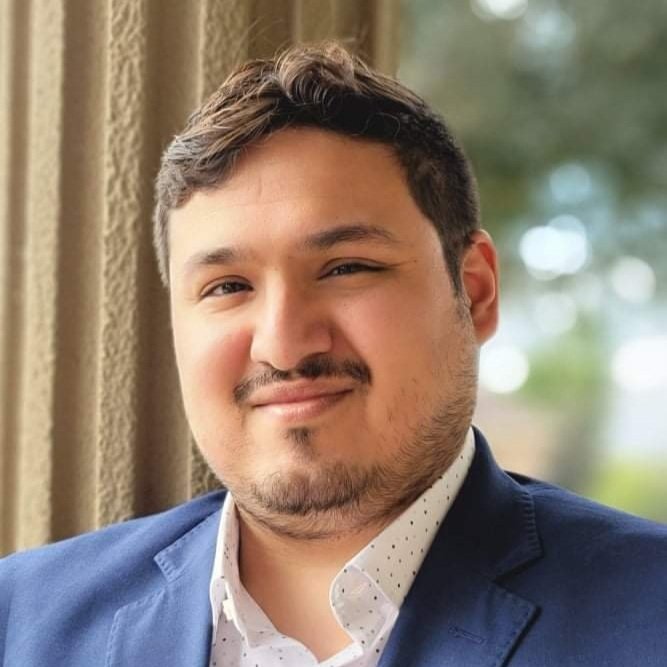
Tenor Pedro Valdez holds degrees from Texas State University and The University of Texas Rio Grande Valley and is gaining attention for his effortless lyrical range. Last summer, he was a young artist with Finger Lakes Opera singing scenes from Lucia di Lammermoor, Rigoletto, and La Traviata. Mr. Valdez sang the role of Rodolfo in La Bohème with the Northern Lights Music Festival Apprentice Program. He has also been a member of Madison Opera’s studio program where he sang Don Cruzio in Mozart’s Le nozze di Figaro, Tenor in the trio from Bernstein’s Trouble in Tahiti, Brother in Weill’s Seven Deadly Sins, and 2nd Nazarene in Strauss’s Salome. Other roles include Rinuccio in Gianni Schicchi, Don Ramiro in La Cenerentola, Don Ottavio in Don Giovanni, Alberto in La Curandera, and Tamino in Die Zauberflöte.
Hillary Brown, mezzo-soprano
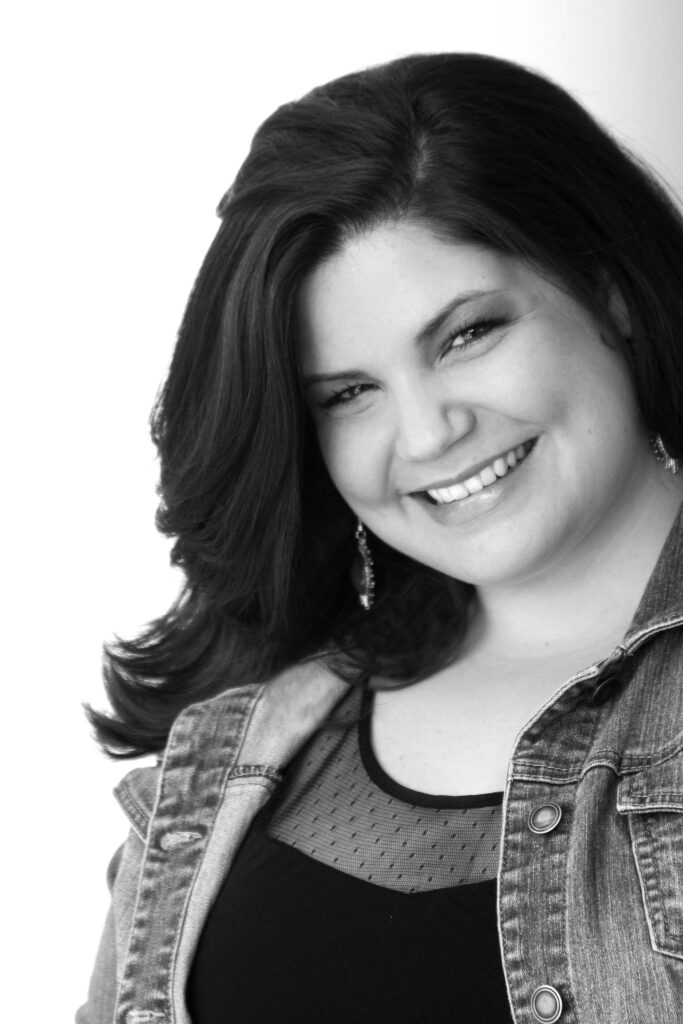
Hillary Brown is an alumna of the University of Illinois at Champaign-Urbana (MM Vocal Performance, magna cum laude) and Stetson University (BM Vocal Performance, magna cum laude). Her study of opera and voice, along with a flair for bringing distinctive characters to life, has resulted in being cast in a wide variety of dramatic and quirky roles, including Lady Billows (Albert Herring), The Housekeeper (Man of La Mancha), Countess Almaviva (Le nozze di Figaro), Dinah (Trouble in Tahiti), First Lady (Die Zauberflöte), and Donna Anna (Don Giovanni). Ms. Brown also performed the role of Isabela in the world premiere revised edition of La Hija de Rappaccini by Daniel Catán. Her stylistic adaptability and vocal beauty have earned Ms. Brown not only a place in operatic repertoire, but in recital repertoire as well. Most recently, she has sung Mirjam’s Siegesgesang (Schubert), Missa in Angustiis (Haydn), Sieben Frühe Lieder (Berg), and Requiem (Duruflé).
Ms. Brown is an inaugural member of Orlando Sings Symphonic Chorus and its chamber choir, Solaria Singers, and is also a member of the Festival Singers of Florida under the direction of Dr. Kevin Fenton. Since returning to Florida in 2015, Ms. Brown has held adjunct voice faculty positions at Dr. Phillips High School and Edgewater High School in Orlando.
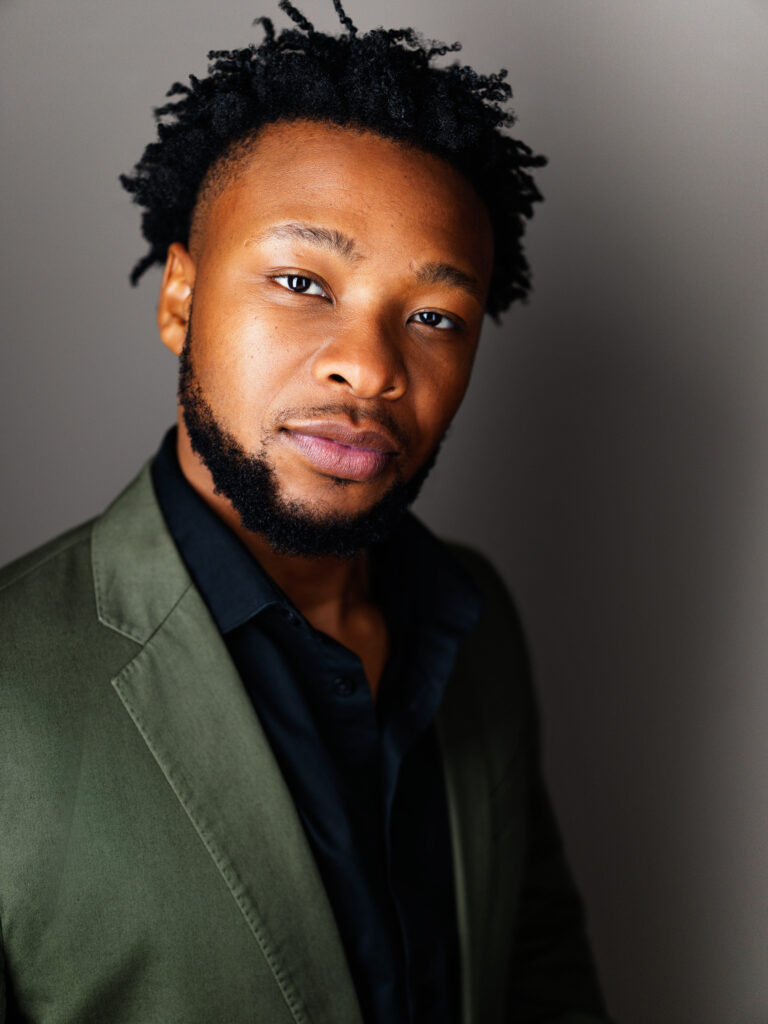
Thandolwethu Mamba, baritone
Eswatini-born Southern African baritone Thandolwethu Mamba has been described as having a “chilling refinement in bearing and voice.” Recent engagements include his Metropolitan Opera debut in X: The Life and Times of Malcolm X, Il Dancaïro in Carmen with Opera Theatre of Saint Louis, Figaro in Le Nozze di Figaro with Frost Opera Theater, Baron Duophol in La Traviata with Opera Wilmington, Town Magistrate in Signor Deluso and Max in Stone Soup with Florida Grand Opera. His creation of the role of Don Calogero Sedàra in The Leopard by Michael Dellaria has been released on Naxos Records. Mr. Mamba is a recent double graduate of the University of Miami and Duke University.
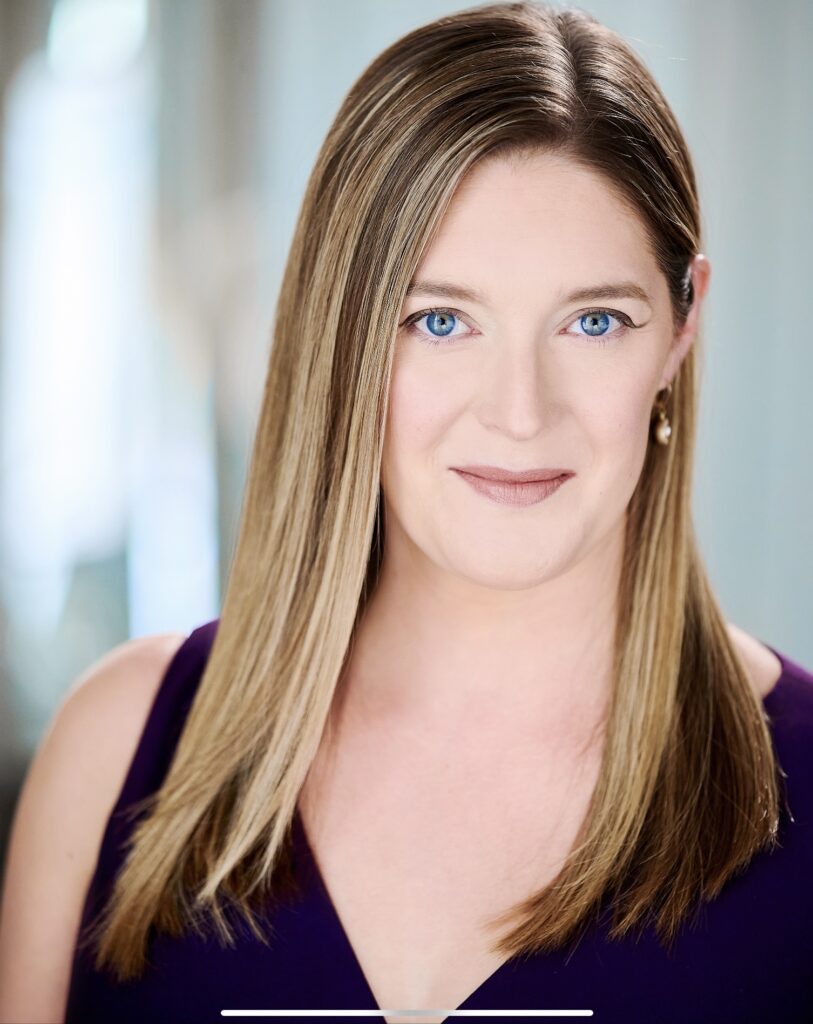
Dorea Cook, mezzo-soprano
Dorea Cook is known for her clear, vibrant sound, and flexibility within diverse styles from solo operatic roles to oratorio, chamber, and contemporary repertoire.
Recent performances include solos with the Solaria Singers, recently voted Orlando’s best Chamber Music Group (Orlando Weekly), the Orlando Sings Symphonic Chorus, and the alto solos in Haydn’s Lord Nelson Mass with the UCF Combined Choirs and Orchestra. Other recent performances include the title role in Massenet’s Cendrillon with Valdosta State University Opera, staged excerpts from Der Rosenkavalier (Strauss), Southeastern premieres of music by John Moody, Emma Lou Diemer, Stefania De Kenessey, and more, and chamber music by Bellini, Mahler, Brahms, and Ravel.
Dorea’s current research focuses on twenty-first century North American art songs by women composers, particularly art songs and crossover songs for the young singer age 16-20. She has presented her findings at a number of conferences, including the 2022 and 2020 NATS National Conferences, the 2019, 2020, 2021, 2022, and 2023 Music by Women Festivals, the 2019, 2021, and 2023 SERNATS Conferences, and the 2019 Georgia NATS Conference. Dorea was awarded a NATS Emerging Leaders award in 2022.
In past years, Dorea Cook has soloed with the Houston Chamber Choir, Conspirare Chamber of Voices, Conspirare Symphonic Choir and the Austin Symphony Orchestra, and the Texas Early Music Project. She can be heard commercially with the Chicago Symphony Orchestra & Chorus on the CSO Resound label and on other recordings with the Houston Chamber Choir, San Antonio Chamber Choir, and the William Ferris Chorale. Formerly an Assistant Professor of Music at Valdosta State University (GA), Dorea teaches at Stetson University, Valencia College, and Seminole State College and is a private instructor and freelancer in the Orlando area. She received her Doctorate of Musical Arts from the University of Texas at Austin.
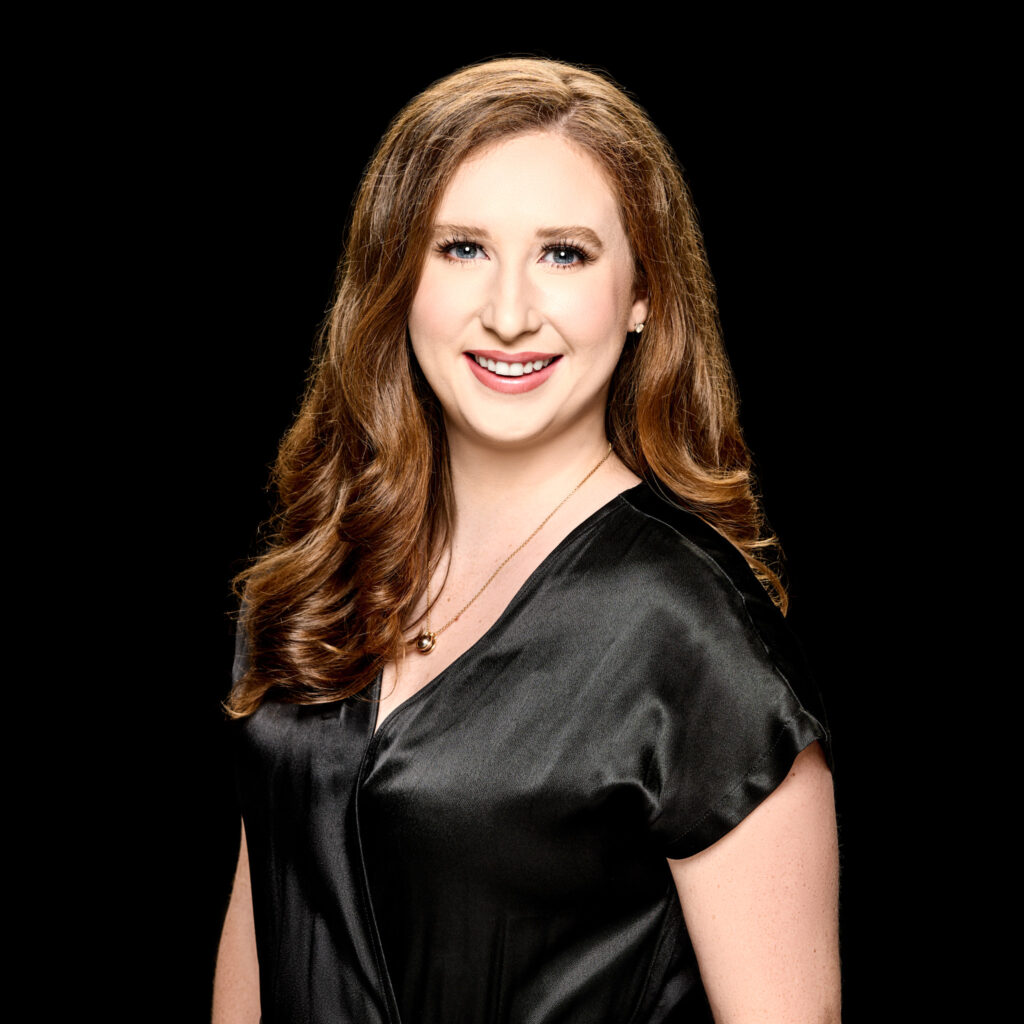
Katherine Counts, soprano
Katherine Counts teaches choir for Orange County Public Schools and has performed with Orlando sings since its inception. Katie received her bachelor’s degree in Music Therapy and her master’s degree in Music Education from the University of Alabama. Katie has performed in numerous productions including St Luke’s Methodist The Little Mermaid and Sound of Music and the debut of La Divina Sirena in Robbiate, Italy.
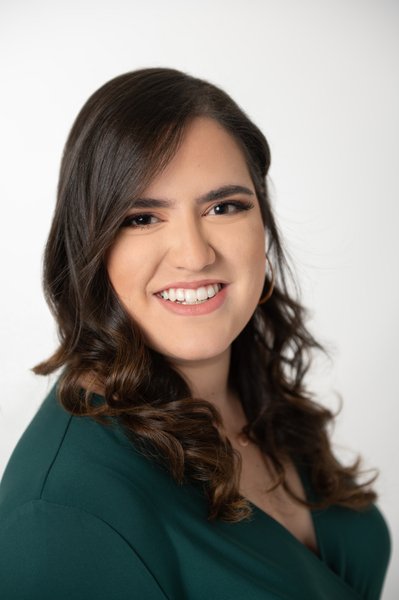
Erika Vasallo, mezzo-soprano
Erika Vasallo is a Cuban-American mezzo-soprano born and raised in Miami, Florida. She has worked with local companies in South Florida including the New Presbyterian Church Concert Series and the Civic Chorale of Greater Miami singing the alto solos in Handel’s Messiah, as well as performing in concerts and operas with Magic City Opera and Orchestra Miami. Last season, she was a Handorf Company Artist with Opera Memphis, where she performed the role of Julia Child in Bon Appétit! and the role of Toledo in The Falling and the Rising. Prior to that, Ms. Vasallo was a Tomita Young Artist with Finger Lakes Opera and has sung notable roles with Taconic Opera. Other credits include singing the roles of Dorabella in Così fan tutte, La Zia Principessa and La Frugola in Suor Angelica and Il tabarro, Zita in Gianni Schicchi, Third Lady in Die Zauberflöte, the title role in Luisa Fernanda, and The Sorceress in Dido and Aeneas.